


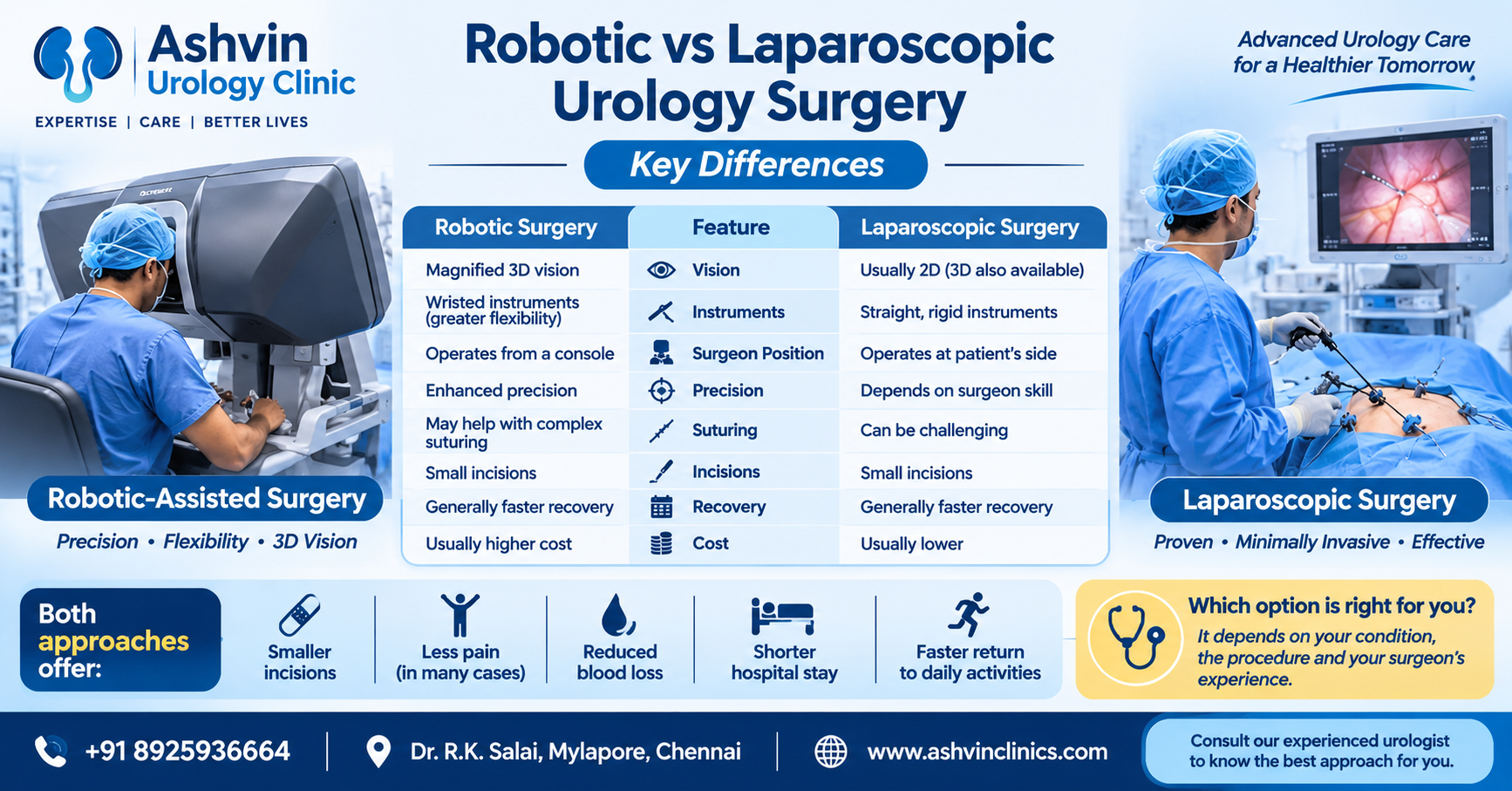
Both robotic-assisted surgery and laparoscopic surgery provide minimally invasive benefits like smaller incisions and faster recovery than open surgery, but they differ significantly in precision, cost, and operative mechanics.
Key Outcome Comparisons
- Precision and Control: Robotic surgery offers 3D high-definition vision, tremor filtration, and 7 degrees of freedom with wrist-like articulating instruments. Laparoscopic surgery relies on 2D vision (in most setups) and long, rigid instruments with limited movement angles.
- Conversion to Open Surgery: Robotic-assisted procedures consistently show a 33% to 65% lower rate of conversion to open surgery compared to laparoscopy, especially in complex surgeries.
- Blood Loss and Complications: Studies report lower intraoperative blood loss and reduced major postoperative complications or infection rates for robotic procedures.
- Operating Time: Laparoscopic surgery generally features shorter operating times. Robotic procedures often take 20 to 70 minutes longer due to docking and system setup.
- Hospital Stay and Recovery: Robotic-assisted surgery frequently results in slightly shorter hospital stays and faster return of bowel function or functional milestones in complex operations, though routine procedures show comparable recovery times.
- Cost: Laparoscopic surgery is significantly more cost-effective with lower equipment and operating room expenses. Robotic surgery involves high capital costs for platforms like the da Vinci system and expensive single-use instruments.