


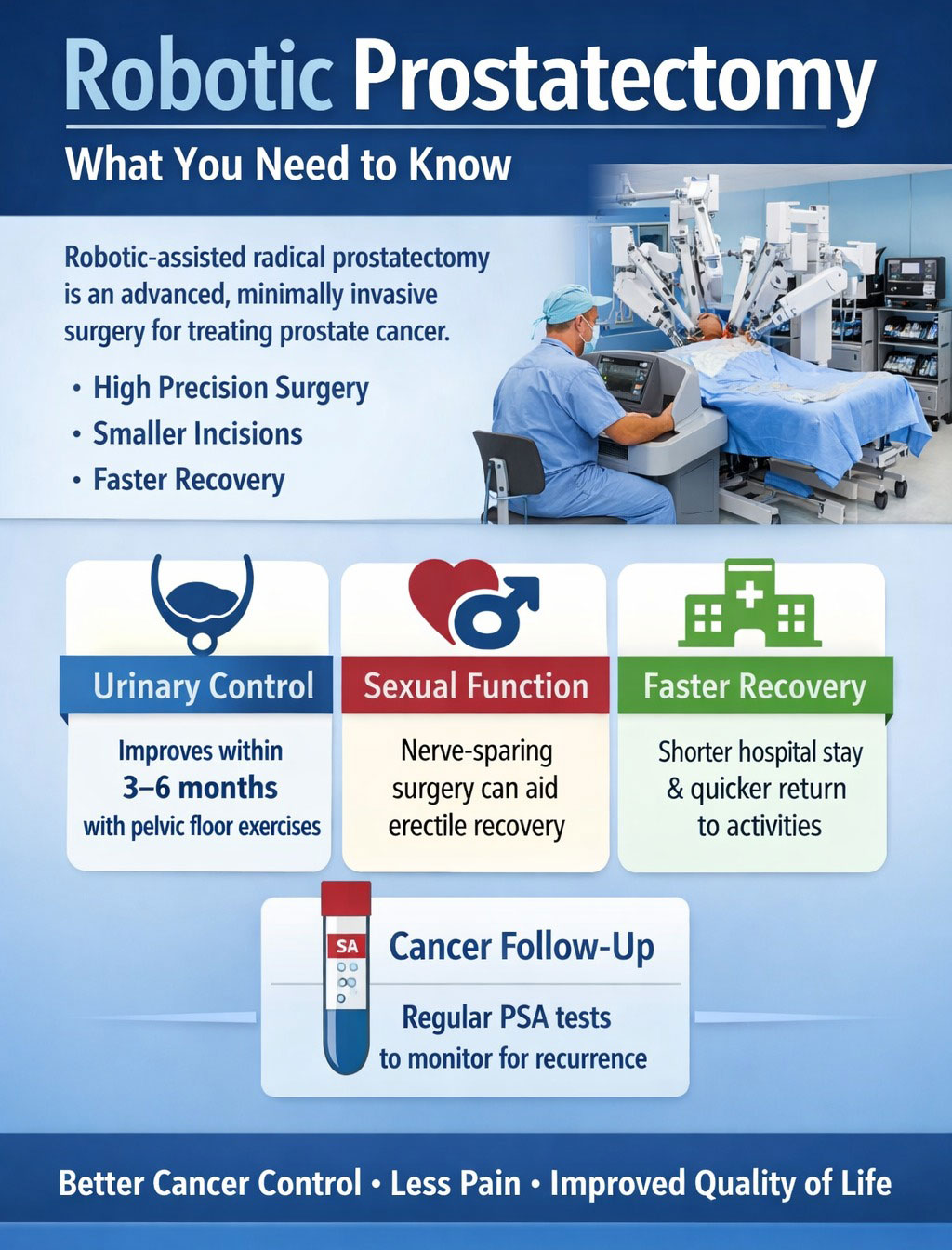
Robotic prostatectomy, also known as robotic-assisted radical prostatectomy, is one of the most advanced surgical treatments for prostate cancer. With the help of robotic technology, surgeons can remove the prostate gland with high precision while minimizing damage to surrounding nerves and tissues. For many patients diagnosed with prostate cancer, a common question is: “What will my quality of life be like after robotic prostate surgery?”
The good news is that most men experience a good quality of life after recovery. Advances in robotic surgery have significantly improved outcomes related to urinary control, sexual function, and overall recovery.
Faster Recovery and Shorter Hospital Stay
One of the major advantages of robotic prostatectomy is that it is a minimally invasive procedure. Instead of a large incision used in traditional open surgery, robotic surgery uses several small keyhole incisions.
Benefits of robotic surgery include:
- Less blood loss during surgery
- Reduced postoperative pain
- Smaller scars
- Shorter hospital stay (usually 1–2 days)
- Faster return to normal activities
Most patients are able to resume light activities within 2 to 3 weeks, while complete recovery may take a few weeks longer depending on individual health and age.
Urinary Control After Robotic Prostatectomy
Urinary leakage (urinary incontinence) is one of the most common concerns for men undergoing prostate surgery. Since the prostate sits close to the urinary sphincter muscles, temporary loss of bladder control can occur after surgery.
However, in the majority of patients this improves gradually. Many men regain good urinary control within 3 to 6 months after surgery. Pelvic floor strengthening exercises, commonly known as Kegel exercises, are highly effective in speeding up recovery.
Factors that influence urinary recovery include:
- Patient’s age
- Pre-surgery bladder function
- Surgical technique and nerve preservation
- Commitment to pelvic floor exercises
With proper guidance from the treating urologist, long-term severe incontinence is uncommon.
Sexual Function and Erectile Recovery
Another important aspect of quality of life after robotic prostatectomy is sexual function. The nerves responsible for erections run very close to the prostate gland. During surgery, surgeons aim to preserve these nerves through a technique called nerve-sparing robotic prostatectomy whenever cancer characteristics allow.
Erectile function recovery depends on several factors:
- Age of the patient
- Erectile function before surgery
- Extent of cancer
- Whether nerve-sparing surgery was possible
Some men may experience temporary erectile dysfunction after surgery. Recovery may take several months to up to two years. Treatments such as oral medications, vacuum devices, and penile rehabilitation programs can significantly improve outcomes.
Return to Daily Life and Work
Most patients gradually return to their normal lifestyle after robotic prostate surgery. Many men are able to resume desk work within 2 to 4 weeks, while more physically demanding activities may take a little longer.
Regular walking and gentle physical activity are encouraged during recovery because they help improve circulation and overall healing. Maintaining a healthy lifestyle also supports long-term prostate cancer outcomes.
Healthy habits include:
- Regular exercise
- Balanced diet rich in fruits and vegetables
- Maintaining a healthy weight
- Avoiding smoking
- Limiting alcohol consumption
Cancer Control and Long-Term Follow-Up
Robotic prostatectomy is highly effective in treating localized prostate cancer. After surgery, patients undergo regular PSA (Prostate-Specific Antigen) blood tests to monitor for any signs of recurrence.
For most patients, PSA levels drop to undetectable levels, indicating successful cancer removal. Regular follow-up visits with the urologist are important to ensure long-term cancer control and overall health.
Emotional and Psychological Well-Being
A prostate cancer diagnosis can be emotionally challenging. Many patients initially feel anxious about surgery and life afterward. However, once treatment is completed successfully, many men experience relief and renewed confidence in their health.
Support from family, counseling, and open communication with healthcare providers can greatly help during recovery.
Conclusion
Robotic prostatectomy has transformed the treatment of prostate cancer by offering excellent cancer control with faster recovery and improved quality of life. While temporary urinary or sexual side effects may occur, most patients recover well over time with appropriate medical care and rehabilitation.