


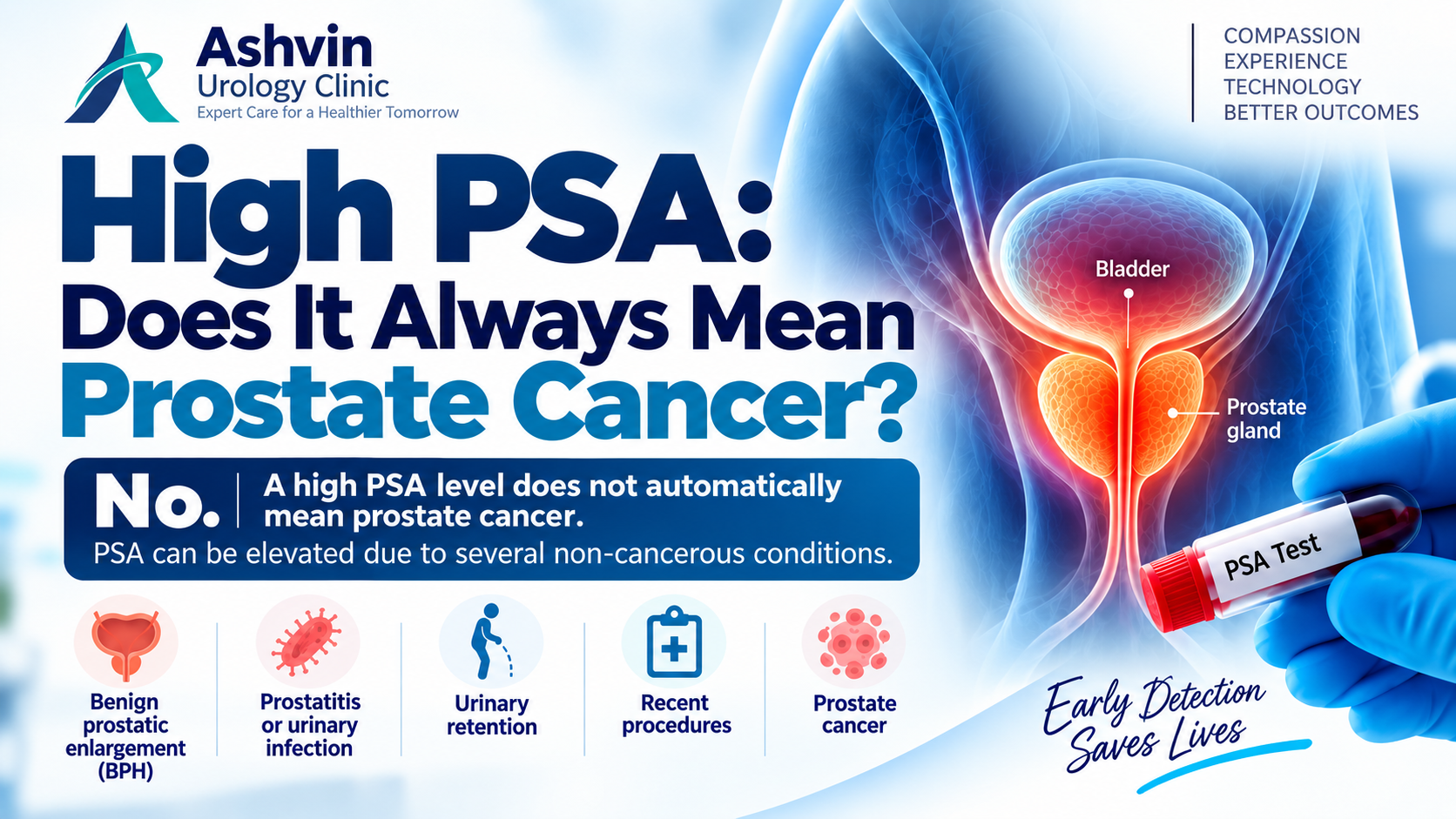
High PSA: Does It Always Mean Prostate Cancer?
No. A high PSA (Prostate-Specific Antigen) level does not automatically mean prostate cancer. PSA is produced by prostate cells, and several non-cancerous conditions can cause the blood level to rise.
What Can Cause a High PSA?
Common causes include:
- Benign prostatic enlargement (BPH) – PSA may increase as the prostate becomes larger with age.
- Prostatitis or urinary infection – inflammation or infection can temporarily raise PSA.
- Urinary retention – difficulty emptying the bladder may affect PSA levels.
- Recent prostate or urinary procedures – certain procedures or instrumentation may temporarily alter PSA.
- Prostate cancer – an elevated PSA can be an important warning sign, but PSA alone cannot diagnose cancer.
Does a Higher PSA Mean Cancer Is More Likely?
In general, the likelihood of prostate cancer increases as PSA rises, but there is no single PSA value that can reliably distinguish cancer from a benign prostate condition.
Doctors interpret PSA together with factors such as age, prostate size, previous PSA values, rate of PSA change, examination findings, family history, and other risk factors.
What Happens If Your PSA Is High?
An elevated PSA does not necessarily mean you need an immediate prostate biopsy. Depending on the situation, your urologist may recommend repeating the PSA test, checking for infection or other temporary causes, performing a digital rectal examination, or obtaining additional tests.
One of the most useful investigations is a multiparametric MRI (mpMRI) of the prostate. It can identify suspicious areas within the prostate and help determine whether a biopsy should be considered.
Do All Men With High PSA Need a Prostate Biopsy?
No. The decision is individualized. If PSA remains elevated or other findings suggest a significant risk of prostate cancer, a biopsy may be recommended.
When biopsy is necessary, MRI-targeted biopsy can help sample suspicious areas more accurately. A transperineal prostate biopsy, performed through the skin between the scrotum and anus, is increasingly used because of its low risk of serious infection.
The Important Message
High PSA is a warning signal—not a cancer diagnosis.
If your PSA is elevated, don’t assume the worst and don’t ignore it. Proper evaluation can help distinguish benign prostate conditions from clinically significant prostate cancer.
Early assessment is particularly important because prostate cancer can be present without urinary symptoms.