

Undergoing a Radical Cystectomy is a major step in the treatment of Bladder Cancer. During this surgery, the bladder is removed, and a new way for urine to leave the body must be created. One common method is a Urostomy, which allows urine to drain through an opening in the abdomen called a stoma. Although adjusting to life with a urostomy can feel challenging at first, most people gradually return to their normal routines with proper care and guidance.
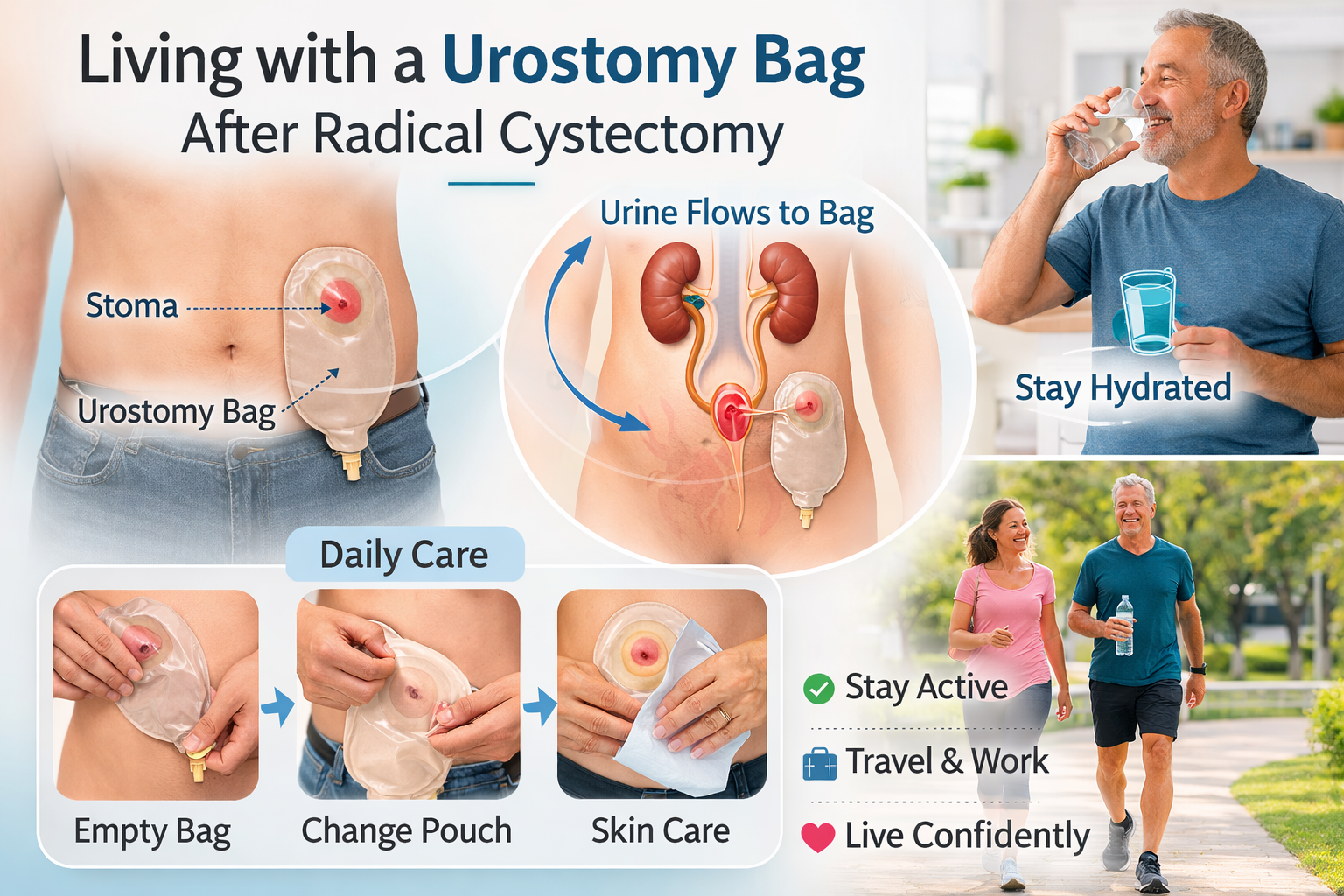
A urostomy works by diverting urine from the kidneys through a small section of the intestine, which is brought to the surface of the abdomen to form the stoma. Urine then drains into a specially designed external pouch attached to the skin. These pouches are discreet, secure, and designed to allow patients to move comfortably throughout the day.
In the early weeks after surgery, patients may need time to adapt to caring for their urostomy. Learning how to empty and change the pouch, clean the skin around the stoma, and monitor for signs of irritation is an important part of recovery. Healthcare providers and stoma care nurses usually provide detailed instructions and support to help patients feel confident managing their urostomy at home.
Skin care around the stoma is especially important. Keeping the area clean and dry helps prevent irritation or infection. Using the correct pouching system and changing it regularly can also protect the skin and maintain comfort. Many patients find that once they develop a routine, urostomy care becomes a simple part of daily life.
Living with a urostomy does not mean giving up normal activities. Most individuals are able to return to work, travel, exercise, and social activities after recovery from surgery. Many modern urostomy pouches are designed to be lightweight, odor-proof, and secure, allowing people to live confidently without worrying about leaks or discomfort.
Diet and hydration also play a role in maintaining good urostomy health. Drinking enough fluids helps keep urine flowing properly and reduces the risk of infections. Some patients may also receive guidance on foods that support overall recovery and urinary health.
Emotionally, adjusting to life after bladder removal surgery can take time. Support from healthcare professionals, family members, and patient support groups can make the transition easier. With education, practice, and support, many patients find they can live active, fulfilling lives after a radical cystectomy and urostomy.
Overall, understanding urostomy care and maintaining regular follow-ups with healthcare providers are key to long-term comfort and quality of life.
APOLLO HOSPITAL CHENNAI FOR ROBOTIC SURGERY
Dr. K Ramesh is the founder of Ashvin Clinics. He is the Senior Consultant Urologist and Robotic surgeon at Apollo Main Hospital, Chennai, India. Dr. K Ramesh completed his medical school and Post Graduation in General Surgery from Kilpauk Medical College, Chennai.